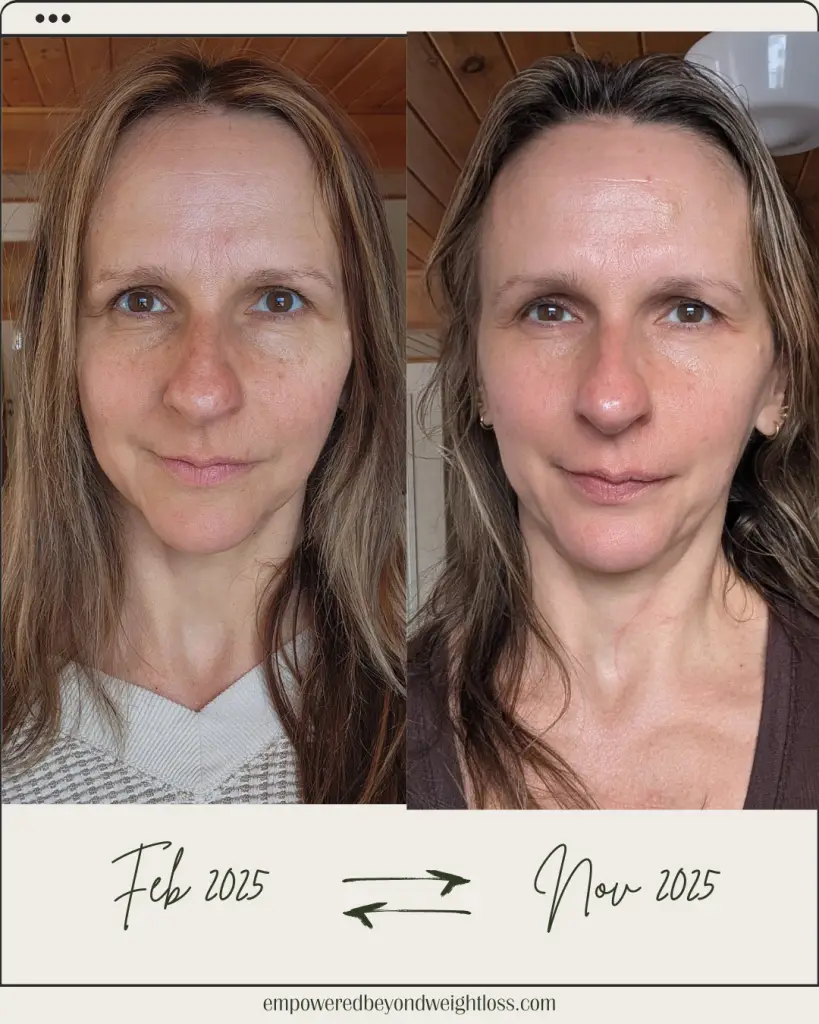
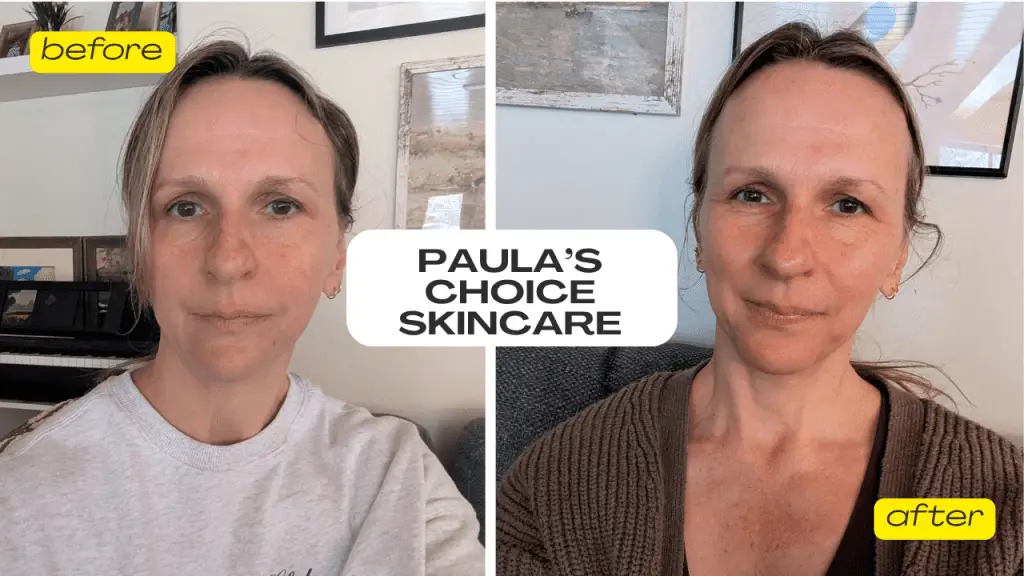
If you spend enough time on social media, it’s easy to believe that the right skincare routine should deliver steady, predictable results. Better skin today. Even better skin tomorrow. And if that doesn’t happen, something must be wrong.
My experience testing Paula’s Choice reminded me that skincare results aren’t always linear, and more isn’t better. Here’s how.
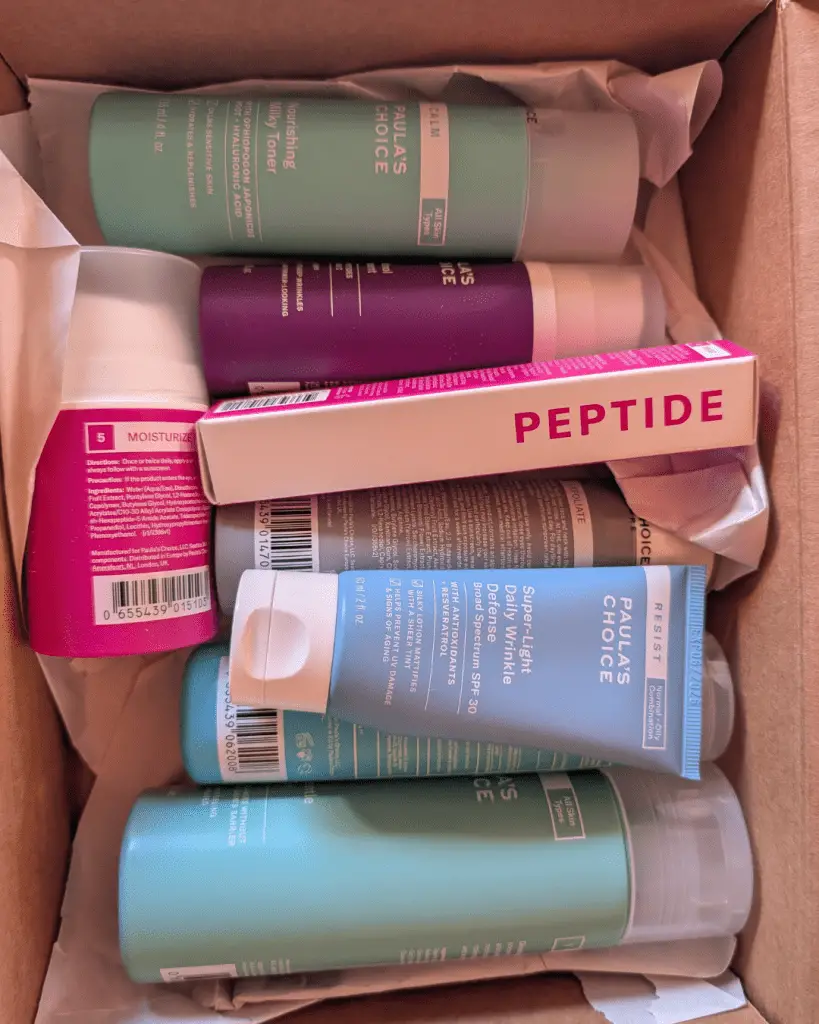
My Paula’s Choice Routine (What I Used)
Over several weeks, I tested a full routine built around gentle care with targeted actives:
- Ultra-Gentle Cleanser
- Nourishing Milky Toner
- Anti-Redness Exfoliating Solution
- 6% Mandelic Acid + 2% Lactic Acid Liquid Exfoliant
- 1% Retinol Treatment (not every day)
- Pro-Collagen Peptide Plumping Moisturizer
On paper, this is a very well-designed routine. The products are fragrance-free, thoughtfully formulated, and clearly created with skin health in mind.
And at first?
My skin looked great.

Nothing like that glass skin feeling!
The “This Is Working” Phase
About one to two weeks into using these products, I was genuinely impressed. My skin looked smooth, clear, and bright. I remember thinking, Wow! This might be it!
That moment is important because it confirms something:
These products work.
If I had stopped the experiment there, this would have been a glowing, enthusiastic review.
But skin doesn’t exist in snapshots; it exists over time.
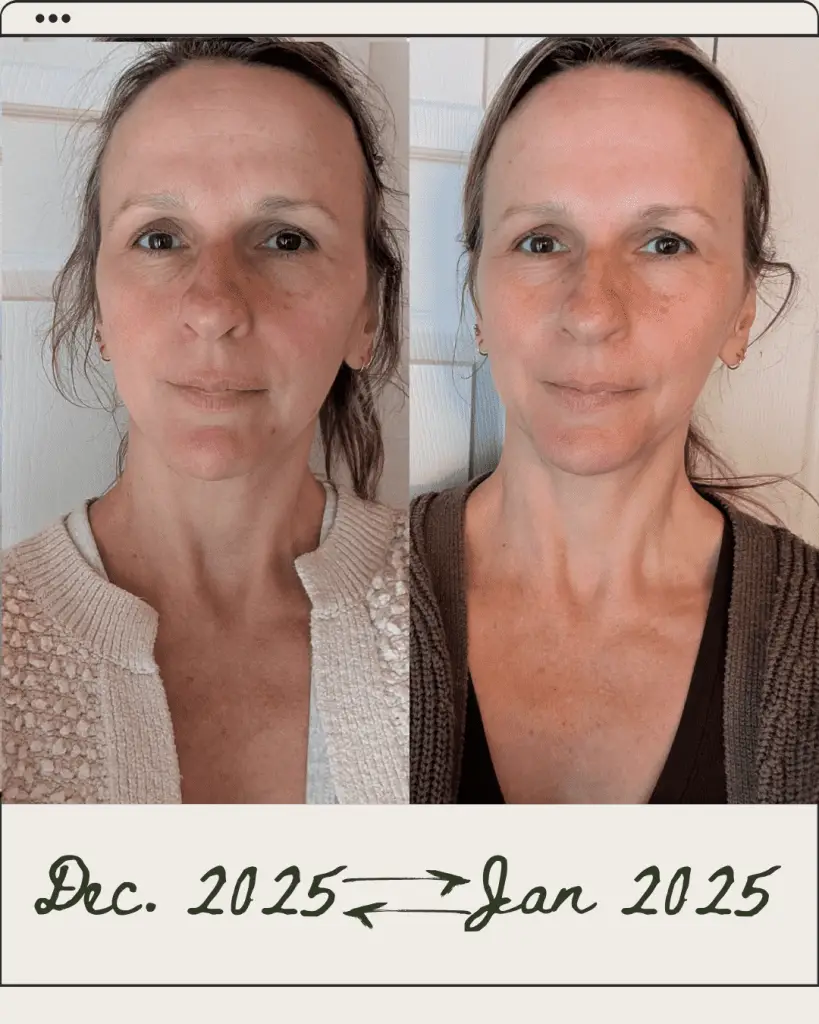
My December skin was the result of The Inkey List routine I tried.
When Things Quietly Shifted
Gradually, my skin started looking… less clear.
Not irritated.
Not broken out.
Not inflamed in an obvious way.
Just not as good.
That “radiant” look softened into something flatter. I needed more product to feel comfortable. Everything still felt fine—but the results no longer matched that early peak.
This is where I decided these weren’t my long-term products.
At the time, I assumed the explanation was simple: maybe this brand just isn’t for me.
But the story didn’t end there.

Was I Doing Too Much?
After stepping back and reassessing, I realized something important: while each product made sense on its own, I may have been asking my skin to do too much overall.
My routine included:
- Multiple chemical exfoliation pathways
- Retinol (even if not daily)
- Ongoing stimulation without many true rest days
None of this was reckless. My skin tolerated it well. But tolerance and thriving aren’t the same thing.
Sometimes, too many high-quality actives don’t cause visible irritation—they create low-level inflammation that quietly dulls the skin over time.

Scaling Back Changed Everything
After intentionally scaling back—pausing exfoliants, using retinol just once, and focusing on gentle cleansing and moisturizing—I noticed something surprising.
My skin became radiant again.
Not slowly.
Not subtly.
But clearly.
That glow I’d seen earlier returned—not because I added something new, but because I removed stimulation and gave my skin space to recover.
This was the moment that reframed the entire experiment for me.
Redness Wasn’t the Problem, It Was the Context
One important detail I should clarify is that facial redness isn’t new for me. I’ve always had slightly red, reactive skin, long before this experiment. It’s part of my baseline, not something I attribute to Paula’s Choice or to overusing products.
In fact, that baseline redness was one of the reasons I included the Anti-Redness Exfoliating Solution in my routine in the first place. My goal wasn’t to “fix” my skin, but to support it as thoughtfully as possible.
What this experiment revealed, however, is that while these products didn’t cause redness, they also didn’t significantly change that underlying tendency. And when combined with multiple actives, my skin seemed to function best with reduced stimulation rather than increased.
Scaling back didn’t eliminate redness, but my skin did feel radiant at times. I felt like I was getting the covetec glass skin.
So… Are These “Bad” Products?
Not at all.
In fact, this experience made me realize that Paula’s Choice may be a brand I return to—but not as a daily, long-term, everything-all-at-once routine.
These products shine when:
- Used strategically
- Cycled thoughtfully
- Paired with enough recovery time
What didn’t work for me wasn’t the quality—it was the cumulative effect of too many actives over time.
The Bigger Takeaway
This experiment taught me something more valuable than a simple yes-or-no verdict:
Great skincare results aren’t linear.
More isn’t always better.
And sometimes, the glow comes from knowing when to pause.
I’m moving on to test other brands, not because this one failed—but because experimentation has helped me better understand my skin.
And that, ultimately, is the point.