Most HIIT workouts aren’t actually HIIT.
If you’ve ever finished a “HIIT” workout without hitting the vigorous heart rate zone, this video is for you.
In this workout, we repeat the same movement over and over — on purpose. Why? Because true HIIT isn’t about variety. It’s about intensity. Short, uncomfortable bursts that push your heart rate into the vigorous zone, followed by real recovery.
This is the only true HIIT workout I’ve found that reliably gets me there — and that I can actually repeat week after week without burning out.
In this video:
- What true HIIT actually is
- Why repeating the same movement works better than switching exercises
- How long HIIT really needs to be for health benefits
- A short, efficient workout that fits real life
This workout is designed for women over 40 who are already active but want maximum cardiovascular and metabolic benefits without long workouts or overtraining.
⚠️ Expect heavy breathing. This is not gentle.
👉 Do this workout 2 times per week for best results.
👉 Pair with strength training, yoga, or walking on other days.
I recently finished a HIIT workout and noticed something interesting: my Fitbit buzzed to let me know I had entered the vigorous exercise zone.
And it made me pause.
Because even though I move a lot — yoga, strength, workouts — I don’t actually hit that zone very often. Even during workouts labeled “HIIT.”
That little alert reminded me of something I’d read years ago: it’s not the length of the workout that matters most , it’s the intensity of specific moments.
What “vigorous” really feels like
Vigorous exercise isn’t subtle.
You’re not chatting.
You’re not wondering how long is left.
You’re counting down seconds and breathing like it’s your job.
That’s not a failure of fitness, it’s the point!
The surprising truth about high-intensity exercise
You don’t need long workouts to get meaningful health benefits.
Research shows that just a few minutes of truly intense effort, done in short bursts, can:
- Improve cardiovascular health
- Support metabolic health
- Increase overall fitness efficiently
The key word here is truly.
Many of us (myself included) spend a lot of time in the “moderate” zone because it feels productive without being uncomfortable. But that middle ground doesn’t create the same adaptations as brief, high-intensity stress followed by real recovery.
What I’m doing differently now
Instead of longer HIIT sessions, I now focus on:
- Very short work intervals (about 30 seconds)
- Same move for the whole workout
- Longer recovery periods
- Movements that spike my heart rate quickly
- Only 2 sessions per week
It’s uncomfortable.
It’s efficient.
And it works.
The bigger picture
This isn’t about pushing harder all the time.
It’s about strategic intensity.
A few minutes of honest effort, layered into an already active lifestyle, can go a long way — especially as we age and want to protect our cardiovascular and metabolic health without burning ourselves out.
Sometimes one small alert is all it takes to rethink how we move.
Why this works (without the science lecture)
These short bursts:
- Improve cardiovascular fitness faster
- Improve insulin sensitivity
- Support mitochondrial health
- Trigger adaptations you don’t get from moderate exercise
And for women over 40 especially:
- They’re efficient
- They don’t require long workouts
- They preserve muscle and metabolic health if recovery is respected
Pick ONE movement per workout (this matters)
Do not rotate exercises.
Staying with one movement lets your heart rate climb higher each round.
Choose the one that spikes your heart rate fastest:
- Burpees (step back if needed, jump up aggressively)
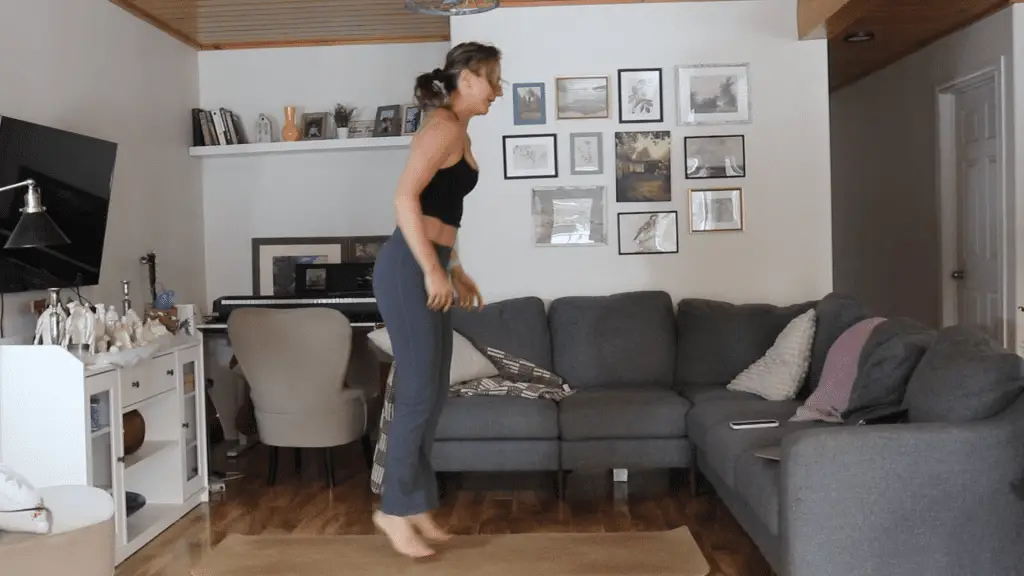
- Squat jumps
- High knees sprinting in place
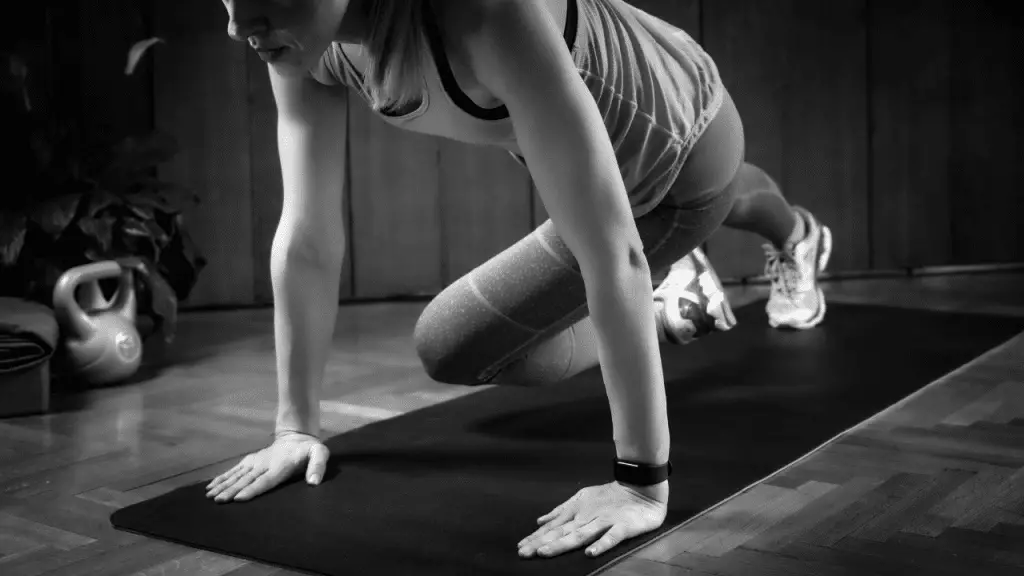
- Mountain climbers (fast, full range)
- Fast stair runs
If your heart rate isn’t hitting vigorous by round 2–3, the movement is wrong or you’re holding back
How to execute the work intervals
For those 30 seconds:
- You should feel like you cannot maintain this pace past 40 seconds
- Last 10 seconds should be mentally uncomfortable
- Breathing should be sharp and uncontrolled
During the 30-60 second recovery:
- Walk
- Hands on thighs
- Let your heart rate drop significantly
If your heart rate doesn’t drop much during recovery, the previous round wasn’t intense enough.